Ph.D. Antti Hautamäki
University of Helsinki
antti.hautamaki@kolumbus.fi
Draft 7.12.2014
Social Physics studies idea flow by big data
A critique of Alex Pentland’s book
Alex Pentland’s book Social Physics, How Good Ideas Spread – The Lessons from a New Science (The Penguin Press, 2014) will reach a great attention among social scientists – I guess. Pentland directs MIT’s Human Dynamics Laboratory and the MIT entrepreneurship Program, and co-leads the World Economic Forum Big Data and Personal Data initiatives.
The term physics in the context of social sciences sounds strange, but the concept of social physics is not a new one. Auguste Comte already used it in the nineteenth century. What is new is that big data about human behavior provides so much data that some aspects of behavior could be treated as physics treats movement of bodies. The key concept is the flow of ideas between people transacting with each other. Note: I use Social Physics with capital letters in order to stress, that Pentland’s version of social physics is just one interpretation.
What is Social Physics?
“Social physics is”, according to Pentland, “a quantitative social science that describes reliable, mathematical connections between information and idea flow on the one hand and people ‘s behavior on the other hand”. “Social physics helps us understand how ideas flow from person to person through the mechanism of social learning and how this flow of ideas ends up shaping the norms, productivity, and creative outputs of our companies, cities, and societies.” (p. 4)
The core of the theory is the understanding how the flow of ideas and information translates into changes of behavior.
There is nothing especially revolutionary in these characterizations. What is new is an extensive use of big data.
Pentland writes:
“The engine that drives social physics is big data: the newly ubiquitous digital data now available about all aspects of human life. … call records, credit card transactions, GPS location fixes etc..”(p. 8)
Note that Social Physics use quite other data that just exchange in social media, although social media information is also used. The rich multi-faceted data “tell the story of everyday life be recording what each of us has chosen to do” (p. 8). The method to analyze this kind of data is called reality mining.
Big data could be collected in real situations, where people communicate with each other, travel, use money etc. By suitable equipment like sociometric badges (see the Appendix 1 Reality mining) one can follow people’s behavior in real time – getting a huge amount of data. This means that transactions in real life form a living laboratory. No more simulation, or interviews or anthropological observations or normal statistics.
The “physical” aspect of social physics is seen clearly in concentration to study the amount of transactions instead of the study of content of transactions. Behavior of people is dependent on microtransactions with other people, not what they think or feel. Here we see close connections to traditional statistical social analysis.
The behavioral model of Social Physics
I think that the most critical aspect of Social Physics is the behavioral model behind it. That model is not a result of Social Physics, it’s a presupposition of the whole enterprise of social physics. For example, the mathematical model used by Pentland and his research group supposes an influence model of idea flow (see the Appendix 4 Math).
Idea flow is a basic concept of the model: Idea flow is the propagation of behaviors and beliefs through social networks by means of social learning and social pressure. Idea flow is “the spreading of ideas, whether by example or story, through a social network”.
Idea, on the other hand, is not something like Plato’s eternal contemplative idea, instead it is “a strategy for instrumental behavior”. Compatible ideas become “habits of action” (p. 20). For Social Physics this concept of idea is crucial: if idea were something mental, one could not study them in Social Physics.
In simple terms, ideas move from people to people when they are in transaction. People adopt ideas when they are compatible with their previous beliefs or when there is pressure to adopt it. Pressure is coming from communities to which people belong. Social influence is the likelihood that one person’s behavior will affect the behavior of another person.
In idea flow there are two related processes: a) learning new ideas and b) adopting ideas. To get new ideas one has to explore them. Exploration is the use of social networks in harvesting ideas and information. Here Pentland refers to Granovetter’s well-known theory of weak links. To get new ideas, you have to go outside your near community (strong links) and meet different people in new situations (weak links, or ties). People tend to bind strong ties to people who are similar and if you communicate with similar people, same “truths” are circulated and repeated. Adoption of new ideas is called engagement. “It is the process in which the ongoing network of exchanges between people change their behavior” (p. 77).
Social learning consists of learning new strategies by observing other people’s behavior or learning new beliefs through experience or observation. A social norm is a set of compatible strategies that all parties agree to produces the best exchange value.
I take the following “law” to be the central thesis of Social Physics:
Exposure to a stream of ideas shapes our habits and beliefs.
This shaping is mainly based on imitation of habits of other people. The role of delibration is not so important. “A fundamental assumption is that learning from examples of other people’s behavior is a major and likely dominant mechanism of behavior change in humans.” (p. 16).
Here Pentland refers to Daniel Kahneman’s distinction between fast and slow thinking. Fast thinking is automatic, associative and parallel, whereas slow thinking controlled, rule-based and serial.
The application goes as follows:
“[F]ast thinking drives our habits and intuition, largely by using association among ideas learned from our experience and those we’ve learned by observing others. In contrast, the slow mode uses reasoning, combining our beliefs in order to reach new conclusions.” (p. 56, see also the Appendix 3 Fast, Slow, and Free Will).
The combination of these two modes in the setting of idea flow happens in moving from selection to exposure:
“we can consciously reason about which flow of ideas we want to swim in but then exposure to those ideas will work to shape our habits and beliefs subconsciously” (p. 51)
Now we are ready to present the behavioral model behind Social Physics. In a schematic form the model is simply the following:
Interaction between people -> Idea flow ->
- New beliefs (exploration, reasoning, “slow thinking”)
- New habits (engagement, social pressure, “fast thinking”)
New habits part is essential here, because new beliefs are inaccessible to Social Physics when not adopted as component of habits or behavior. In the figure 1 the basic structure of Pentland’s argument is presented.
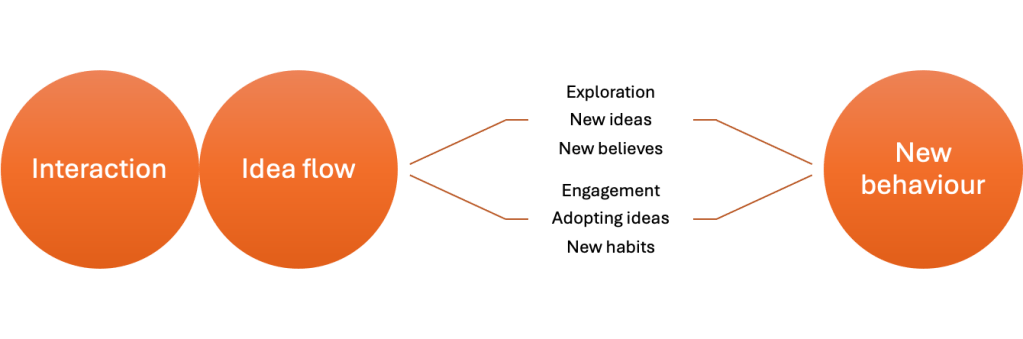
Figure 1. The basic theory of Social Physics
Math of Social Physics
There is no social physics without mathematical formulas. I think that the formulas developed by Pentland and his team is the most valuable results of Social Physics. The math is based on Markov model of state change. Let us suppose that the behavior of a person a is a function of his inner state ha at the moment t. Social influence on a is a conditional probability Prob(ha/hb) of the states of some other people b in the previous time t-1. To calculate the influence we need two more components. One is matrix telling the tie strength between persons. Another is the conditional probability describing the transition from a state h of each other person in time moment t-1 to the state ha of a in time moment t. For details and other formulas, see the Appendix 4 Math.
Reflections about Social Physics
Alex Pentland advocates Social Physics by referring to case studies showing how we can explain innovation, creativity, productivity and social change by big data analysis. The cases are interesting but not so surprising to anybody familiar with cognitive science, innovation studies or sociology.
The chapters about Data-Driven Cities and Data-Driven Society are promising. We can indeed develop better cities and societies if we know better how people in fact behave; how they communicate, where they shop, how they move, where they meet each other etc. Big data capturing tools and equipment provide researcher and developers huge amount of data about people’s daily behavior.
But still, is Social Physics a new social science beating existing economics, cognitive science or sociology? I think not! Still it’s an important extension of empirical research about social organizations and their change.
The most challenging issue in this position is the role of theories. Big data approach shows how ideas are flowing and how people are changing their behavior. But then we don’t know why they are changing their behavior. Here is the place of traditional theories to enter and explain the “reasons” for behavior of people, say be referring to classes or motives. The only theory of Social Physics is the behavioral model describe above in Figure 1. It’s the theory of theories. Is it enough?
Some reservation must be addressed to the extension of big data available. Are all important aspects of behavior really among the data reached by transaction data like credit card using, calls to other people etc.? What about values, trust, culture, meanings etc.
There are also serious problems related to privacy issues. Pentland is well aware of privacy challenge. He has been active in World Economic Forum, UN and international corporations to promote his proposal for a New Deal of Data. Its core is “to give individual citizens the rights over the data that are about them” (p. 180). The Deal includes “the right to full control over the use of your data”. A appreciate this deal very much.
As a philosopher and cognitive scientist I have a special comment about the concept of idea in Social Physics. For me “idea” is more related to knowledge than to habits. It’s illuminating that the word “knowledge” is lacking in the Index. Networks and communication are important for knowledge creation. And knowledge is our conception about the world and how it works. Knowledge is first of all know-that-state, but it is also related to know-how-state, at least if we accept pragmatism.
How is knowledge created? It’s created in the process of collaboration – it’s a result of co-creation. In this sense I appreciate taking idea flow as a central concept of Social Physics. But new knowledge is also a product of individual thinking, say of Karl Marx, Luis Pasteur, Albert Einstein, Isaac Newton, Max Weber etc. These “exceptional” people created totally new ideas about the world and society and these ideas changed the world! We don’t reach individual creativity at all by big data. Instead “the data tells us that that deviation [from common habits] occur only a few present of the time” (p. 190). Right, but not a fact to neglect.
There is no place to such important concepts as content, intention, meaning, knowledge or even radical change. Instead we have physics without human beings. Pentland writes: “Social physics is based on statistical regularities that span the population, i.e. things that are true of almost everyone almost all the time” (p. 189). “This means that we can observe humans in just the same way we observe apes or bees and derive rules of behavior, reaction and learning.” (p. 190). And this kind of research is going to beat traditional research about classes (sociology) or markets (economics), according to Pentland.
In my mind, what seems to peculiar to post-industrial societies, are exceptions, deviations, continuous creation of new knowledge, new value production, meaning changes, small stories, continuous revolution etc. Of course, a lot of human behavior is regular and “statistical”, and big data provides more accurate and extensive new data. But we need also “slow sociology” studying deviations and creation of new knowledge – the impact of thinking.
Summary
Social Physics is a serious attempt to benefit form big data about transaction of people. Indubitably it will generate new interesting results concerning human behavior. To study idea flow is essential for understanding social change. Many aspects of human behavior are more related to the frequency of interaction than to the content of communication. Still to understand social change one has to study also novelties, innovations and intellectual breakthrough. Then the content aspect of social interaction must be on the agenda of social research. To practice Social Physics alone means dehumanization and naturalizing social sciences.
 Sustainable innovation
Leave a comment